Kick-Off for SmartFab Research Project: Partners Launch Development of a Virtual Solar Cell Factory
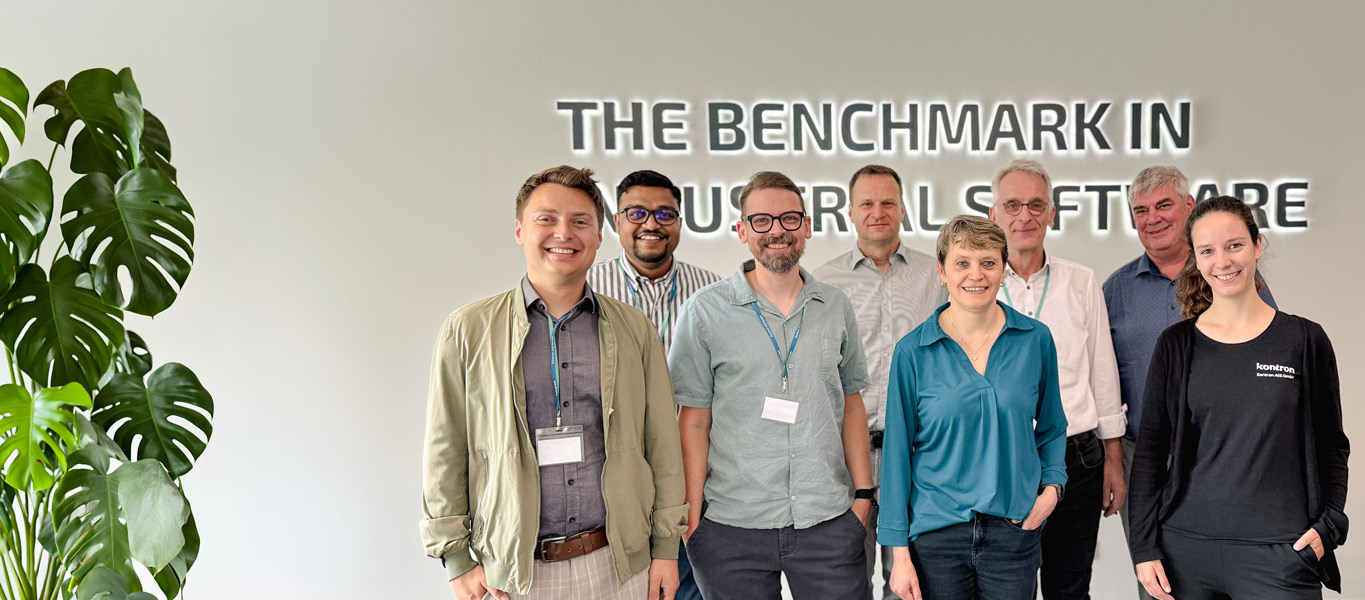
Last week, the SmartFab research project officially kicked off at our site in Dresden. Representatives from ISC Konstanz, Kontron AIS, RCT Solutions, and ISRA VISION came together for the project launch to align on objectives, timelines, and the next steps.
SmartFab addresses a key challenge facing the European solar industry: New solar cell factories must be planned faster, ramped up more reliably, and operated more efficiently. Achieving this requires digital tools that enable companies to realistically test production processes before investing in the construction or modification of costly manufacturing facilities.
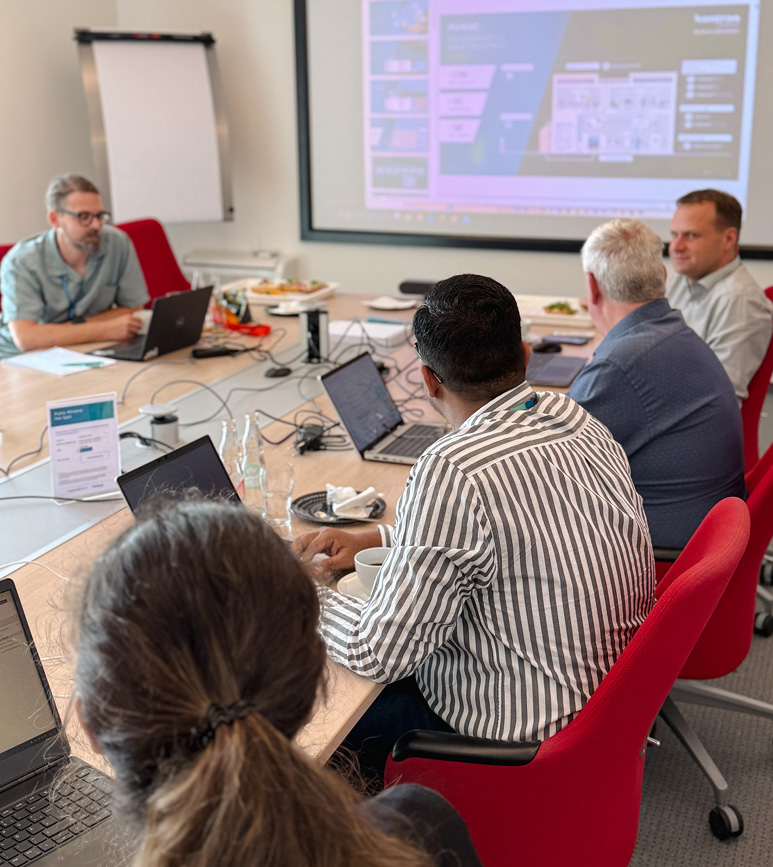
Building a Shared Understanding as the Foundation for Project Success
During the kick-off meeting, the partners aligned their work packages, discussed upcoming milestones, and organized collaboration across the consortium. "In the first project year, we will establish the foundations for the virtual factory. This includes the factory and automation concept, the digital architecture, and the first building blocks of the digital twin. Close coordination among all project partners is essential for achieving these goals," says Thomas Dreyer, Head of R&D at Kontron AIS.
A Virtual Factory Instead of Costly Test Environments
Today, the global photovoltaic value chain is heavily dependent on non-European supply chains. At the same time, European companies often lack realistic testing environments where new manufacturing concepts can be evaluated under industrial conditions. SmartFab aims to close this gap. The virtual factory will digitally represent and connect machines, processes, and products. This will allow new cell technologies, production layouts, and process parameters to be simulated and evaluated without the need to build a physical production line.
Unlike existing approaches that focus on individual production areas, SmartFab combines factory planning, digital twins, AI-based analytics, wafer tracking, and production control within a single, integrated framework. As a result, new cell technologies and manufacturing concepts can be validated more quickly and transferred into industrial production faster.
Kontron AIS Connects Physical Manufacturing and the Digital Twin
Within the project, Kontron AIS is responsible for key tasks at the interface between physical production and the virtual factory. These include MES integration, equipment connectivity, hybrid wafer tracking, data management, as well as reporting and analytics functions. This creates a seamless connection between real-world manufacturing operations and the digital twin. The collected data will provide the foundation for intelligent analytics, process optimization, and future AI-driven applications within the virtual factory.

Contributing to European Technological Sovereignty
SmartFab is far more than a new simulation environment. The project is designed to build expertise for planning and operating modern solar cell factories in Europe, accelerate the industrial adoption of innovative manufacturing technologies, and sustainably strengthen the competitiveness of European manufacturers.
The research project runs until the end of May 2029 and is funded by the German Federal Ministry for Economic Affairs and Energy.